High-Quality Kitchens: Hidden Details Every Homeowner Should Know
Updated: Sep 16
When homeowners plan a high-quality kitchen, attention naturally focuses on visible elements like door styles, colours, worktops, and handles. These choices shape the overall look of the space and help it feel personal, but the true performance of a kitchen depends on what lies beneath.
Cabinet construction, drawers, hardware, and storage solutions all determine how durable and functional the kitchen will be over time. Understanding these hidden details helps homeowners make informed decisions and invest in a kitchen that remains practical, attractive, and long lasting for years of daily use.
The cabinet structure: the foundation of a kitchen
Most people focus on doors when assessing kitchen quality, as they are the first thing seen, although the cabinet structure carries most of the responsibility for durability. The carcass forms the kitchen’s framework, determining how effectively it supports worktops, appliances and heavy storage. In carefully crafted kitchens, cabinets remain rigid and stable for years. Panels are robust, joints carefully assembled, and internal fixings provide strength where it matters most.
This aspect is not always immediately visible in showrooms, as attention naturally focuses on colours, finishes and door styles. However, experienced kitchen professionals often assess cabinet construction first. When strong, well-built cabinetry supports the design, the entire kitchen benefits from greater durability and long-term performance. For homeowners planning a kitchen to last, cabinet strength is one of the most important considerations.

Drawer systems: quality revealed daily
If cabinet construction forms the foundation, drawers are where quality is noticed immediately. They are opened and closed dozens of times each day, storing cutlery, pans, utensils, crockery and food. Poorly engineered drawers reveal themselves through sticking, uneven movement or premature wear.
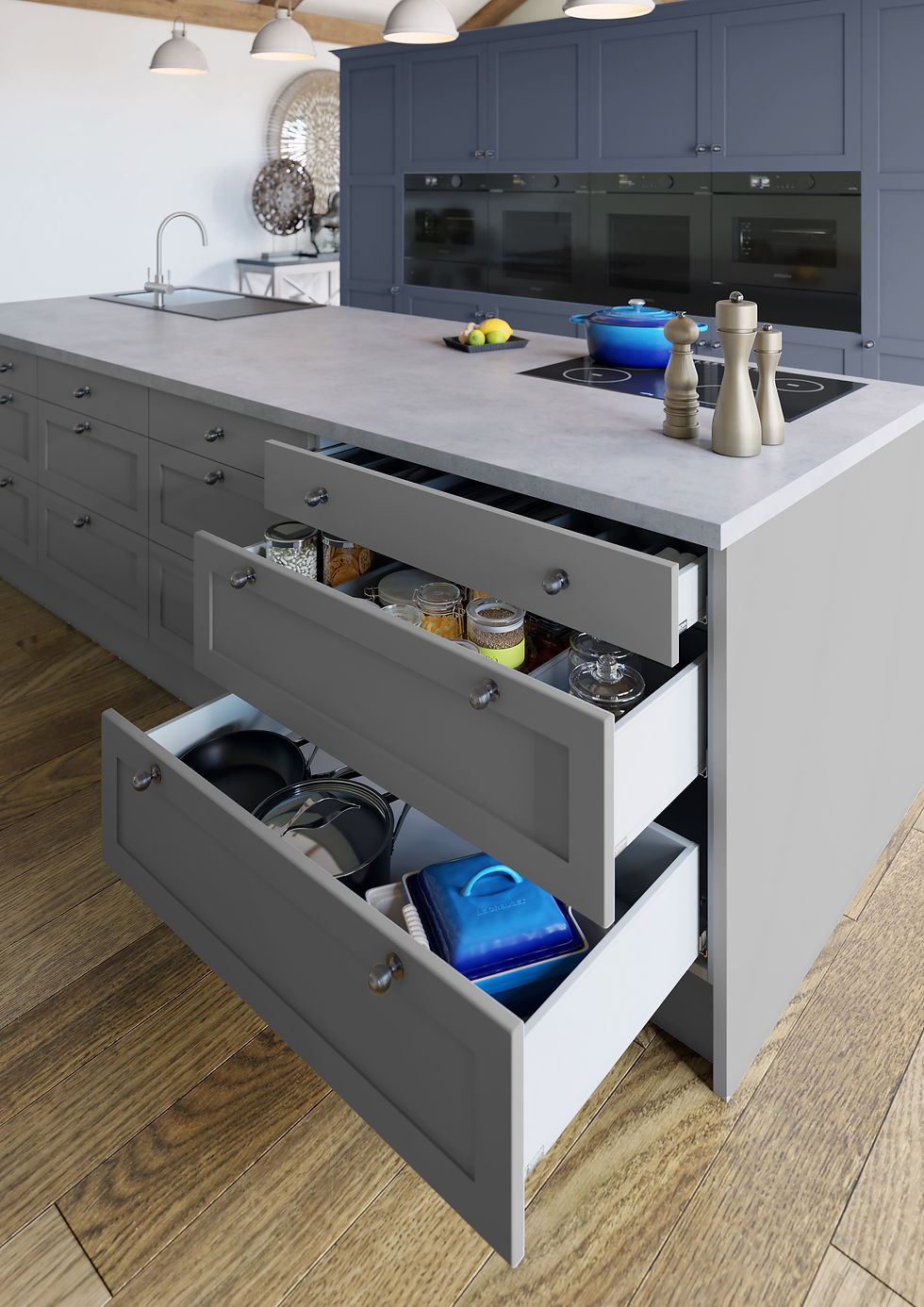
High-quality drawers operate smoothly and quietly under heavy loads. Full extension runners allow easy access to the back, while soft-close mechanisms ensure gentle, controlled closing. Many kitchens also include internal organisers that keep items neatly arranged, dividers, trays and adjustable compartments make drawers highly efficient storage spaces.
When visiting a showroom, test drawers fully, feel their sturdiness, and notice how smoothly they glide. These interactions often reveal more about quality than appearance alone. Despite being frequently used, drawers rarely dominate early design discussions.
Hinges and hardware: small but essential
Hinges may seem minor, but they play a crucial role in performance. High-quality hinges allow doors to open smoothly and close quietly, while adjustable mechanisms keep them aligned over time. Well-engineered hardware allows fine tuning without major adjustments, ensuring doors continue to operate smoothly for years to come.
Storage engineering: well considered design behind the doors
A well-planned kitchen makes the most of available storage. While many homeowners think a larger kitchen is required to solve storage challenges, smart cabinetry planning can often optimise the space you already have.
Smart kitchens combine deep drawers for pans, organisers for utensils, tall larder units for dry goods, and corner solutions that make awkward areas usable. These features may not always get the spotlight on your first showroom visit, yet they dramatically improve functionality. The difference between a kitchen that looks good and one that genuinely supports daily life often lies in these hidden design decisions.
Materials that stand the test of time
A kitchen endures constant use and exposure to heat, moisture, cleaning products, and daily wear. High-quality kitchens use materials that resist moisture, maintain structural strength, and retain their appearance over time. Cabinet materials, protective finishes, and durable surfaces all contribute to long lasting satisfaction. A kitchen that continues to feel solid and look good reflects careful material selection and considered design decisions.
Precision manufacturing and craftsmanship
Every well-built kitchen combines design expertise, precision engineering, and skilled craftsmanship. Accurate manufacturing ensures smooth installation and consistent performance. Consistency guarantees each cabinet performs as intended, contributing to the overall strength of the installation. Many homeowners never see this stage, yet it sets the foundation for a kitchen that feels robust, balanced, and carefully finished.
Why the best kitchens feel effortless
A well-made kitchen supports daily life naturally, where drawers open smoothly, doors close quietly, and storage feels intuitive. The space simply works in a way that feels calm and organised. These experiences result from hundreds of small decisions in design and manufacturing. When carefully considered, the kitchen becomes more than a visual space, it quietly supports the rhythm of family life.
Looking beyond the surface
It is natural to focus on visible elements when planning a kitchen. Colours, finishes and design details shape the aesthetic and give the space character. Yet the qualities that determine long-term performance, cabinet construction, hardware quality, storage engineering and manufacturing precision are often hidden.
For homeowners investing in a kitchen to enjoy for years, looking beyond the surface is a valuable step. The most rewarding kitchens are rarely defined by appearance alone; they are characterized by how well they are made and how naturally they support everyday life.


